What is Motivational Interviewing?
Meeting Ourselves With Curiosity
I used to think change happened when I finally got tired enough of myself. Tired of my repeated poor patterns. Tired of the dysfunctional relationship dynamics that I regularly found myself in. Tired of the way I reacted when I felt unseen or afraid. I imagined that if I could just be stricter, clearer, more disciplined, more “healed,” then I would become someone different. That voice that says, “Why can’t you just stop doing this?” or “Why are you still here?” or “What is wrong with me?” was there, yet I felt stuck in old ways of thinking and doing.
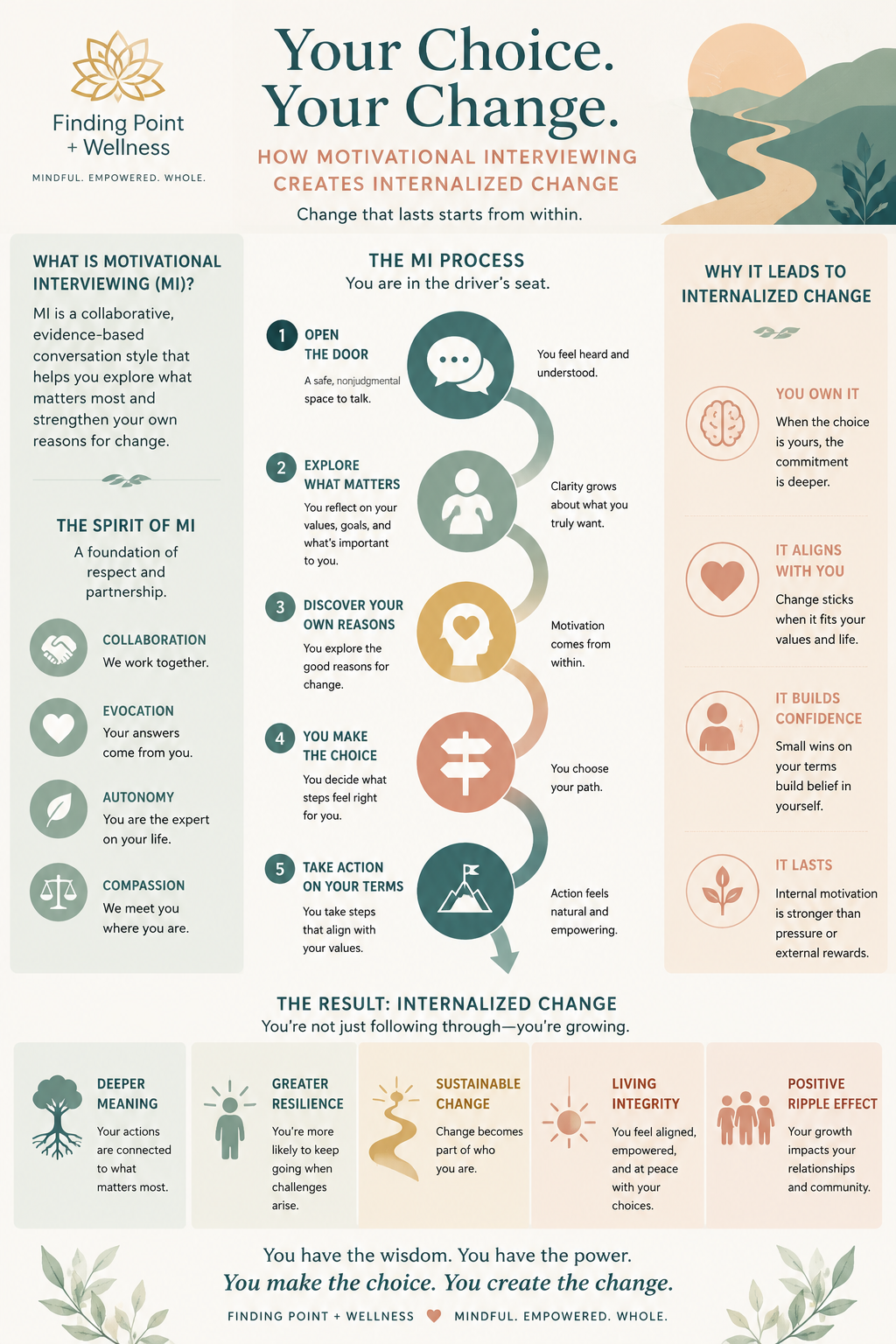
Motivational interviewing offers a gentler doorway into change. Not because it is soft in a superficial way, but because it respects something I have had to learn slowly: people rarely move forward when they feel shamed, cornered, or argued into becoming better. We may comply for a while. We may perform change for someone else. But lasting change usually begins somewhere more honest, in the quiet spaces where we feel safe enough to tell the truth about our uncertainties.
The American Psychological Association describes motivational interviewing as a client-centered approach that helps people explore ambivalence and find their own reasons for change. In everyday language, I think of it as a way of listening that does not try to wrestle someone into wisdom. It asks, gently, “What matters to you? What feels hard about changing? What part of you wants something different, and what part of you is afraid?”
Why Change Can Feel So Complicated
Most of us have at least one place in our lives where we know, at some level, that something needs to shift. Maybe we want to drink less, move our bodies more, stop reaching for our phone when we feel lonely, leave a painful relationship pattern, eat in a way that supports our energy, or speak with more honesty when a boundary has been crossed. From the outside, these changes can look simple. Just stop. Just start. Just choose differently.
But if change were only about information, most of us would already be transformed. We know the article. We know the podcast. We know the doctor’s recommendation, the therapist’s question, the friend’s concern, the quiet whisper of our own body. And still, we hesitate.
Why does this happen? Psychologically, ambivalence (a.k.a. mixed feelings) makes sense. A behavior may be hurting us and helping us survive at the same time. The relationship we keep returning to may wound us, but it may also keep us from feeling abandoned. The habit we want to change may numb us, soothe us, distract us, or give us a small sense of control when life feels too much. Even the patterns we dislike often began as attempts to protect something tender.
This is one reason I find motivational interviewing so human. It does not begin with the assumption that resistance is stubbornness. It begins with curiosity. What if the part of us that resists change is not lazy or broken, but scared? What if it has a history? What if it has been trying, clumsily but sincerely, to keep us safe?
The Relief of Not Being Forced
I have noticed, in myself and in others, that being pushed often makes us push back. Even when the advice is good. Even when the person giving it loves us. There is something inside the human nervous system that tightens when it senses control. We may become defensive, quiet, agreeable on the surface, or strangely frozen. Later we might wonder, “Why did I shut down? Why couldn’t I just receive what they were saying?”
Motivational interviewing works with that reality instead of shaming it. It is built on partnership, acceptance, compassion, and the belief that people carry their own wisdom, even when it is buried under fear or confusion.
The National Council for Mental Wellbeing describes the process through four movements: engaging, focusing, evoking, and planning. I hear those as a kind of relational sequence: first we feel met, then we find direction, then we listen for our own reasons, and only then do we begin to consider the next step.
That order matters. How often do we skip straight to planning before we have been heard? We make the workout plan before exploring why our body feels like a battleground. We set a boundary script before grieving how long we abandoned ourselves. We decide to be more mindful before acknowledging that stillness can feel unbearable when we have spent years outrunning pain.
There is a reason Finding Point often returns to emotional well-being, mindfulness, healthy boundaries, relationships, somatic practices, movement and physical wellness, nutrition, and personal reflections as interconnected parts of being human. We do not change in isolated compartments. Our choices live inside our bodies, histories, relationships, and beliefs about what we deserve.
What Motivational Interviewing Sounds Like in Real Life
Imagine someone saying, “I know I need to rest more, but I can’t seem to slow down.” A more forceful response might be, “You have to prioritize yourself,” or “You’re going to burn out if you keep this up.” Both may be true. But truth delivered without attunement can feel like another demand.
A motivational interviewing response might sound more like, “Part of you knows you need rest, and another part feels like slowing down is not really allowed. What do you think rest would cost you?” That question does not solve the problem immediately. But it opens a door. Maybe rest feels unsafe because the person grew up being valued for productivity. Maybe stillness brings up grief. Maybe asking for help has never felt reliable. Suddenly, the issue is not laziness. It is a living story.
Or imagine someone wanting to improve their nutrition but feeling stuck in a cycle of eating for comfort at night. A shaming approach asks, “Why don’t you have more self-control?” A curious approach asks, “What is food giving you in those moments that you are not getting anywhere else?” Maybe the answer is comfort, permission, reward, rebellion, or one peaceful moment in a day that has asked too much. From there, change becomes less about punishment and more about tending to the need underneath the pattern.
This does not mean every behavior is healthy or that all choices should be left unquestioned. It means we are more likely to respond differently when we understand what has been driving us. Research summarized through the National Library of Medicine notes that motivational interviewing has been found useful across many health-related behaviors, including substance use, physical activity, dental hygiene, body weight, and treatment adherence. That matters, but what touches me most is the human principle underneath the evidence: people often need dignity before direction.
Listening for the Part That Already Wants to Heal
One of the most beautiful parts of motivational interviewing is the attention it gives to “change talk.” That phrase simply means the moments when someone expresses desire, ability, reasons, or need for change. It might sound like, “I do want things to be different,” or “I have handled hard things before,” or “My kids are watching how I treat myself,” or “I miss feeling present in my own life.”
When I think about my own life, I can see how much changed when someone listened for that part of me instead of arguing with the part that was afraid. There were seasons when I was not ready to make the obvious decision. I could name the pain, but I could not yet leave the pattern. If someone had told me what to do too quickly, I might have defended the very thing that was hurting me. But when someone asked, “What do you already know?” I could feel a quieter truth begin to rise.
This is not magic. It is not a guarantee. Sometimes change is slow, uneven, and frustrating. Sometimes we take a brave step and then retreat. Sometimes we choose what is familiar because unfamiliar peace can feel strangely threatening. But motivational interviewing reminds us to listen for the part that still wants life, even if it is whispering.
The Greater Good Science Center at UC Berkeley often explores practices connected to compassion, mindfulness, and well-being. That feels important here because self-compassion is not an excuse to stay stuck. It is often what gives us enough steadiness to look honestly at where we are. When shame takes over, we hide. When compassion is present, we may finally be able to tell the truth.
How We Can Begin Responding Differently
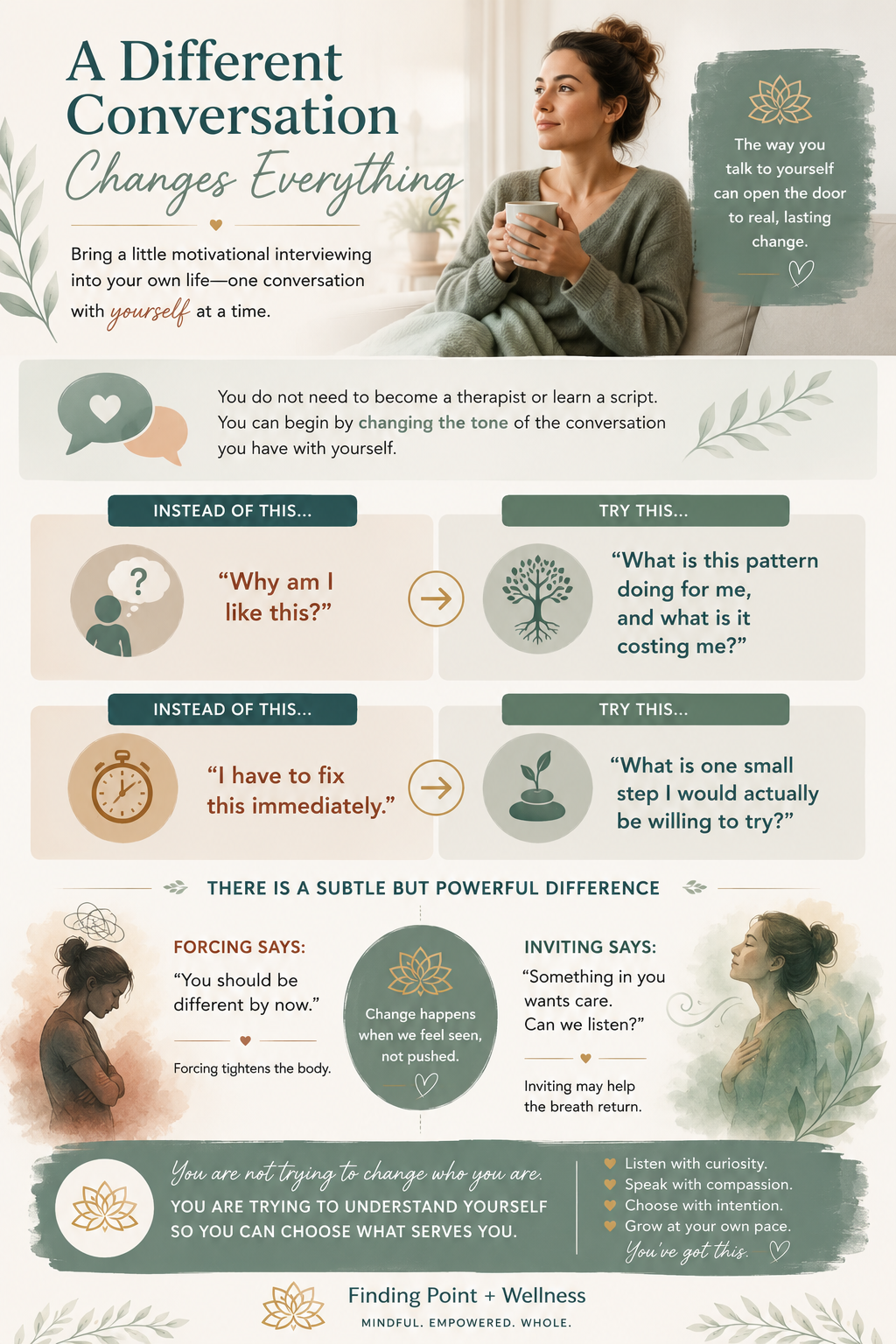
If you want to bring a little motivational interviewing into your own life, you do not need to become a therapist or learn a script. You can begin by changing the tone of the conversation you have with yourself. Instead of asking, “Why am I like this?” you might ask, “What is this pattern doing for me, and what is it costing me?” Instead of saying, “I have to fix this immediately,” you might ask, “What is one small step I would actually be willing to try?”
There is a subtle but powerful difference between forcing and inviting. Forcing says, “You should be different by now.” Inviting says, “Something in you wants care. Can we listen?” Forcing tightens the body. Inviting may help the breath return.
You might try this today with one area where you feel divided. Choose something real but not overwhelming. Maybe you want to move your body more, but part of you feels exhausted. Maybe you want to set healthier boundaries, but part of you fears disappointing someone. Maybe you want to practice mindfulness, but part of you does not want to feel what is underneath the busyness.
Then ask yourself, gently: What do I want? What makes this hard? What have I already tried? What matters enough that I am even thinking about changing? On a scale from zero to ten, how important does this change feel right now? And perhaps most tenderly, why did I choose that number and not a lower one?
That last question can be surprisingly revealing. If you say your confidence is a three, the old voice may scold, “Only a three?” But the motivational interviewing voice wonders, “What makes it a three instead of a zero?” There, you may find evidence of strength. You may remember that you have changed before. You may realize that some small part of you believes change is possible. We can build from that.
Practicing With Others: Less Fixing, More Presence
Motivational interviewing can also soften the way we show up in relationships. I think many of us become fixers because we cannot bear to watch people we love suffer. We jump in with advice, warnings, research, solutions, and sometimes a little panic disguised as certainty. Underneath, we may be saying, “Please change so I can stop feeling afraid for you.”
But people can often feel when our help is more about relieving our discomfort than honoring their process. This does not make us bad. It makes us human. Still, we can practice a different way. We can ask open questions. We can reflect what we hear. We can affirm effort without pretending everything is fine. We can ask permission before offering advice: “Would it be okay if I shared something I have noticed?” or “Do you want me to listen, or would it help to think through options together?”
Consider a friend who keeps returning to a painful relationship. It may be tempting to say, “You need to leave.” Sometimes safety concerns do require direct action and support, and if there is abuse or immediate danger, outside help matters. But in many complicated relational situations, a more spacious question might be, “What do you notice happens inside you when you imagine leaving?” or “What are you hoping this relationship will become?” or “What would feeling safe and respected look like to you?”
These questions do not remove responsibility. They invite awareness. They help the person hear themselves. And sometimes, hearing ourselves clearly is the beginning of choosing ourselves differently.
Small Steps That Honor the Nervous System
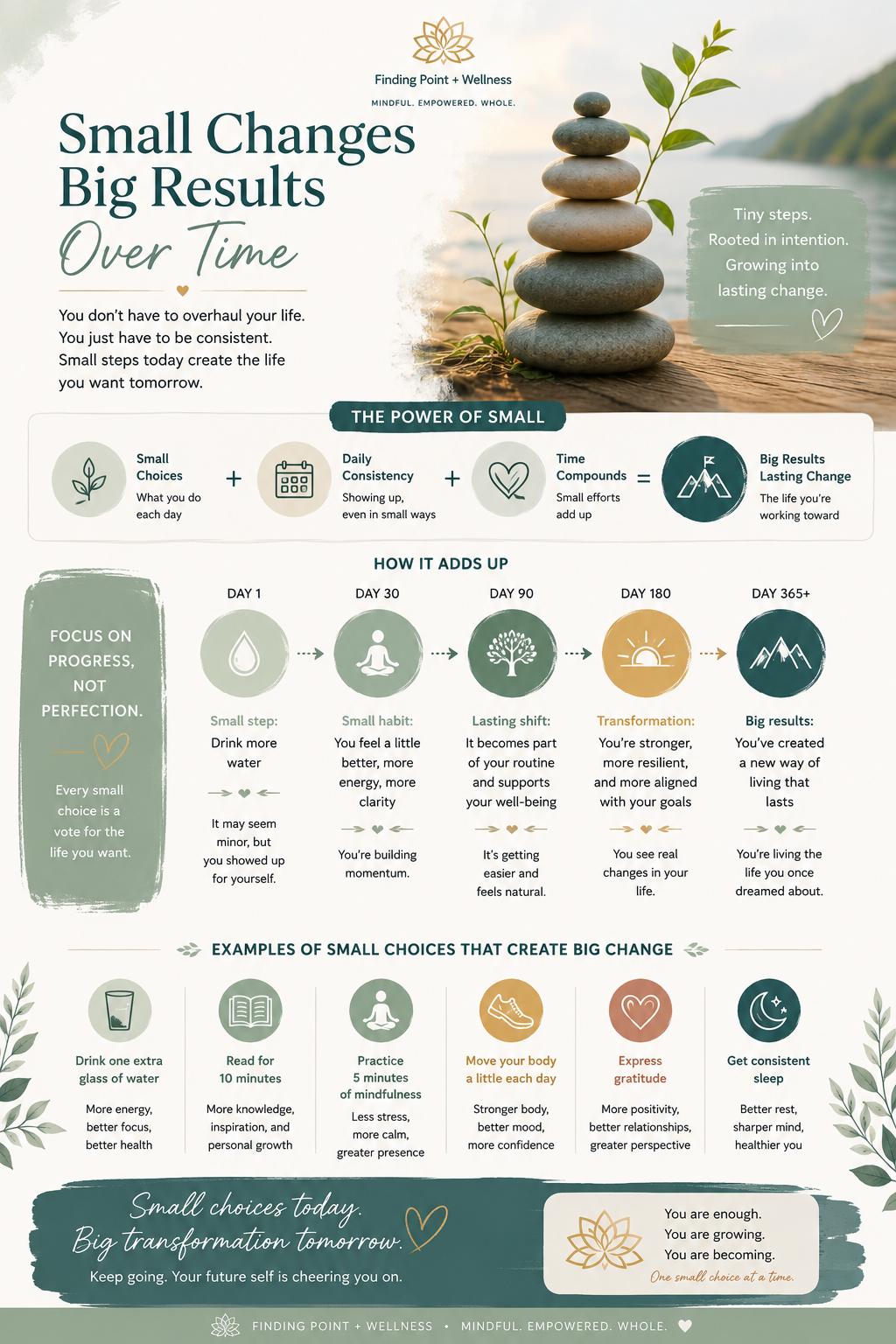
One thing I appreciate about motivational interviewing is that it does not demand a dramatic transformation before breakfast. It respects readiness. This matters because our nervous systems often need change to feel survivable. Too much too soon can activate threat. Small, chosen steps can create trust.
If your change is connected to movement and physical wellness, maybe the first step is not a full workout plan. Maybe it is a ten-minute walk while noticing the air on your skin. If your change is connected to nutrition, maybe the first step is adding one nourishing thing rather than taking everything comforting away. If your change is connected to emotional well-being, maybe the first step is naming one feeling without explaining it away. If your change is connected to somatic practices, maybe it is placing a hand on your chest and asking, “What feels true right now?”
Practical steps can be gentle and still meaningful. Write down both sides of your ambivalence. Reflect back your own words as if you were speaking to a dear friend. Ask yourself what value is hiding underneath the change you want. Is it freedom? Stability? Presence? Self-respect? Connection? Then choose one action so small it almost feels too simple. The point is not to impress anyone. The point is to begin building a relationship with yourself that is not based on threats.
When We Need More Support
There are also times when self-reflection is not enough, and I want to say that without shame. Some patterns are braided with trauma, depression, anxiety, addiction, chronic stress, or relationships where safety has been compromised. The National Institute of Mental Health offers information about mental health conditions and treatment resources, and support from a qualified professional can be a deeply important part of change.
Motivational interviewing is not about doing everything alone. In fact, at its best, it reminds us that healing often happens in relationships where our autonomy is respected. We may need a coach, therapist, physician, support group, coach, trusted friend, or community that can help us hear ourselves without rushing us. We may need someone who can hold hope when ours feels thin.
And if you are supporting someone else, it’s okay to remember your own limits. Compassion does not mean abandoning yourself. Healthy boundaries can coexist with deep care. We can love people and still tell the truth about what we can and cannot carry.
A Gentler Way Forward
What I keep coming back to is this: motivational interviewing trusts that people are more than their stuck places. It trusts that ambivalence is not failure. It trusts that underneath resistance, there may be fear, wisdom, longing, grief, exhaustion, or a need that has never been properly heard.
I do not know what you are carrying as you read this. Maybe there is a habit you are tired of defending. Maybe there is a relationship question you keep circling. Maybe your body has been asking for tenderness, or your mind has been asking for quiet, or your heart has been asking for a life that feels more honest. I will not pretend there is a perfect five-step path from here to healing. But I do believe there is value in beginning with a different question.
Instead of “What is wrong with me?” maybe we ask, “What has been trying to protect me?” Instead of “Why can’t I change?” maybe we ask, “What part of me already wants something more truthful?” Instead of forcing ourselves into a version of growth that feels like punishment, maybe we practice listening for the small, steady voice inside us that still wants to come home.
If you want to begin today, begin there. Not with certainty. Not with shame. Just with one honest question, one compassionate pause, one small choice that honors the person you have been and the person you are still becoming.
A core component of the Integrative Wellbeing Sessions offered at Finding Point + Wellness is using a person-centered and trauma-informed approach, with client autonomy as a guiding tenet. If you would like support as you make small, healthy changes for you, please send us a message. We would love to chat and see how we can collaborate to help you meet your goals.
