What is Positive Psychology?
When I first began learning about positive psychology, I remember feeling a little unsure about the word “positive.” Sometimes, when we have lived through hard seasons, positivity can feel like pressure. It can sound like someone asking us to smile over pain, move on too quickly, or pretend that life is easier than it really is. And if you have ever been told to “just think positive” when you were hurting, you may already know how lonely that kind of response can feel.
But positive psychology, at its best, is not about denying pain. It is not about forcing happiness or ignoring grief, stress, disappointment, anxiety, or relationship wounds. The way I understand it, positive psychology gently asks a different kind of question: alongside what has hurt us, what has also helped us survive? What gives us steadiness? What helps us reconnect with meaning, hope, emotional well-being, and the parts of ourselves that are still trying?
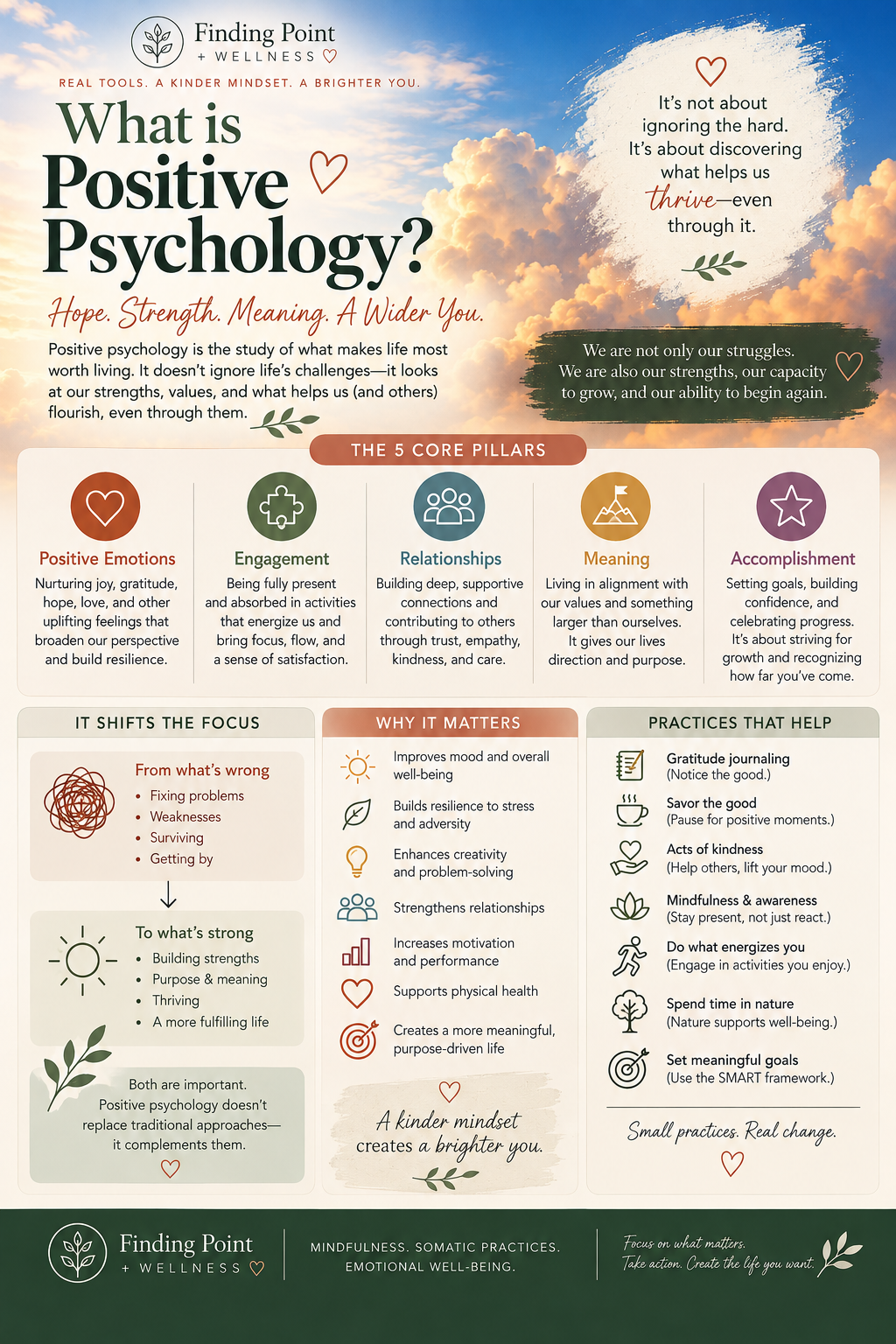
The American Psychological Association describes positive psychology as a field that looks at the psychological states, strengths, and social conditions that support well-being and help make life feel worth living. That definition matters to me because it does not erase struggle. It simply makes room for another layer of the human experience. We are not only our pain. We are also our capacity to grow, connect, reflect, repair, and begin again.
What Positive Psychology Really Means in Everyday Life
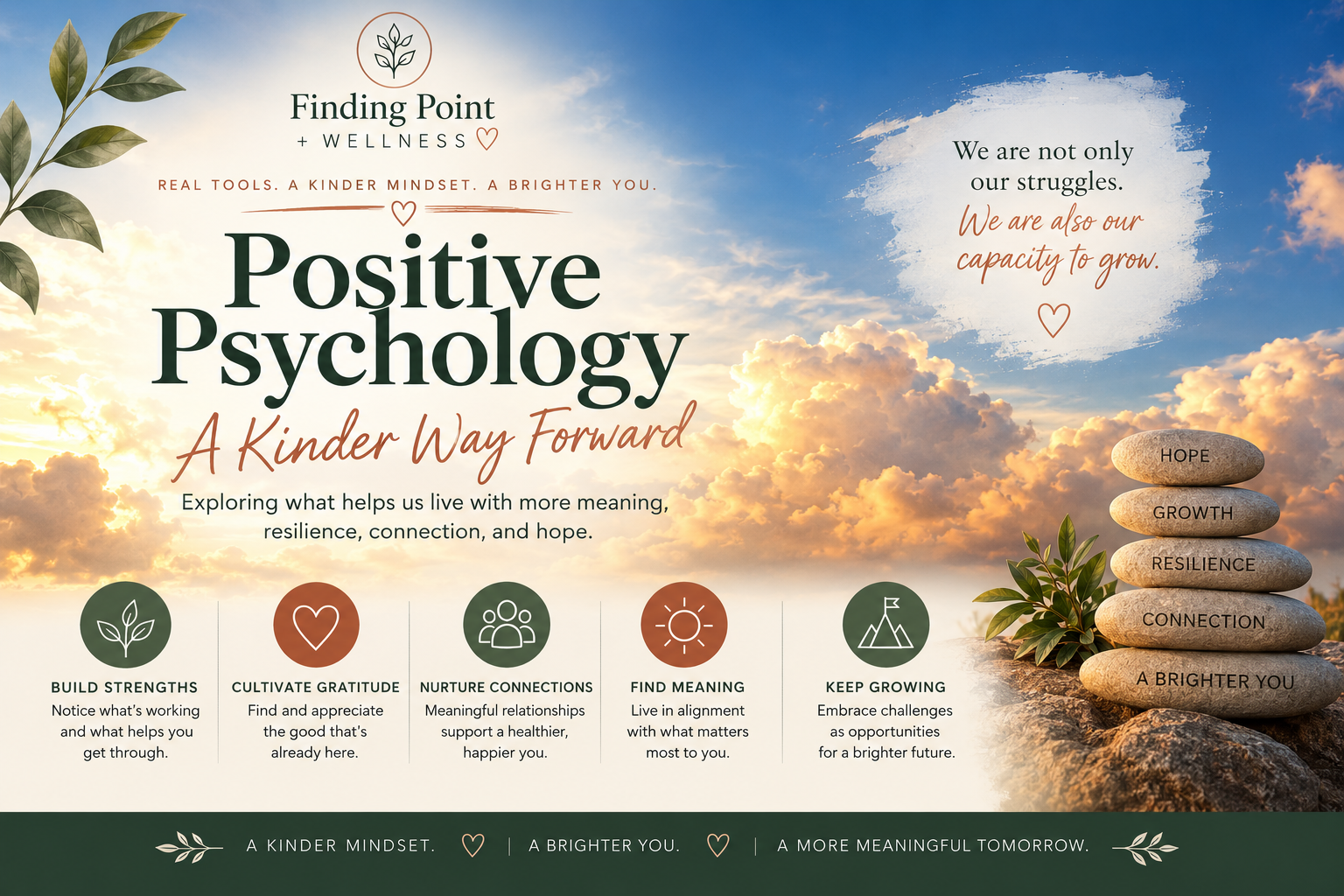
In everyday language, positive psychology is the study of what helps us live with more meaning, resilience, connection, gratitude, compassion, and grounded hope. It asks us to notice what supports the human spirit without pretending that life is simple. I think that distinction is important because many of us are not looking for someone to tell us everything is fine. We are looking for ways to feel a little more capable inside the life we actually have.
Maybe positive psychology looks like pausing long enough to notice that we handled a difficult conversation a little differently than we used to. Maybe it is recognizing that a walk outside helped soften the sharp edges of a stressful day. Maybe it is learning how to receive care without immediately feeling like a burden. Sometimes it is as simple, and as meaningful, as asking ourselves, “What helped me get through today?”
This is why I often connect positive psychology with emotional well-being, mindfulness, relationships, and whole-person wellness. Our inner life does not exist in one small compartment. Our thoughts, bodies, relationships, habits, food choices, movement, sleep, boundaries, and environment all speak to one another. When we begin noticing those connections with curiosity instead of criticism, we give ourselves more room to heal.
Why Our Minds Can Get Stuck on What Hurts
If positive psychology is so helpful, why does it sometimes feel hard to notice what is good, safe, or supportive? I do not think that means we are ungrateful or negative. I think it means we are human. Our minds are often shaped by protection. When something painful, disappointing, or frightening happens, the brain tends to remember it because it wants to help us avoid that pain again.
For example, if we grew up in an environment where love felt unpredictable, we may become very skilled at scanning for changes in someone’s tone, mood, or attention. If we have been criticized often, we may notice the one thing we did wrong before we can take in the ten things we did well. If life has required us to be strong for a long time, softness may feel unfamiliar, even when it is what we need most.
Psychologically, this makes sense. Our nervous system learns from experience. It remembers patterns. It tries to keep us prepared. But over time, we can begin to confuse being prepared with being at peace. We may start living from a place of bracing, waiting, pleasing, overthinking, or pulling away. Positive psychology does not shame those responses. It gently helps us ask, “Is this still helping me, or is there another way I can support myself now?”
Building Resilience Without Pretending We Are Okay
Resilience is one of those words that can be misunderstood. Sometimes it gets used as if we should be able to bounce back quickly from anything. But the kind of resilience I find most honest is not about rushing ourselves. It is about learning how to come back to ourselves with care, even when life has changed us.
The National Institutes of Health Emotional Wellness Toolkit describes emotional wellness as the ability to handle stress, adapt to change, and move through difficult times with support. I appreciate that because it reminds us that resilience is not a personality trait reserved for a few people. It is something we can practice in small, ordinary ways.
Maybe resilience begins when we notice that we are overwhelmed and choose to step outside for air instead of pushing through until we shut down. Maybe it sounds like telling a trusted friend, “I do not need you to fix this, but I do need someone to sit with me in it.” Maybe it is learning to name what we feel without making ourselves wrong for feeling it.
One gentle practice I come back to is asking three simple questions at the end of a hard day: What felt heavy today? What helped me stay connected to myself? What is one small thing I can offer myself tomorrow? These questions do not solve everything, but they help us become more attentive to our inner world. Over time, that attention can become a kind of emotional safety.
Gratitude That Feels Real, Not Forced
Gratitude is often included in positive psychology, but I think it needs to be handled gently. Gratitude should never be used to minimize pain. We do not need to be thankful for everything that happens to us. We do not need to compare our pain to someone else’s pain in order to talk ourselves out of feeling. That kind of gratitude can become another way of abandoning ourselves.
But grounded gratitude can be different. It can help us notice small signs of support without denying what is hard. The warm cup of tea. The friend who checked in. The moment our shoulders dropped after we breathed more slowly. The song that helped us cry. The quiet realization that we made it through something we were not sure we could face.
The Greater Good Science Center offers research-based practices for a happier life and a more compassionate society, and I appreciate how much of their work brings well-being back into everyday practice. Gratitude does not have to be grand. Sometimes it is simply noticing, “This moment did not take from me. This moment gave me a small place to rest.”
Strengths Are Not Always Loud
Positive psychology also invites us to notice our strengths. Not in an inflated way, and not because we have to prove ourselves, but because many of us have been much more practiced at naming our flaws than our growth. We may call ourselves too sensitive when we are actually deeply perceptive. We may call ourselves weak when we are exhausted from carrying too much for too long. We may call ourselves difficult when we are beginning to recognize what does and does not feel healthy for us.
I wonder what would happen if we began naming strengths in softer language. Instead of saying, “I should be stronger,” we might say, “I am learning steadiness.” Instead of “I am bad at relationships,” we might say, “I am learning how to communicate with more honesty and care.” Instead of “I always mess things up,” we might ask, “What was I trying to protect, and what might I try differently next time?”
This is where healthy boundaries can become part of positive psychology too. Boundaries are not about becoming cold or uncaring. They are often about protecting the conditions that allow our kindness, clarity, and emotional health to survive. When we learn to say no with gentleness, pause before reacting, or ask for what we need, we are practicing a form of self-respect that can support our well-being.
How We Can Begin Responding Differently
Learning positive psychology as a life practice does not mean we suddenly respond perfectly. Most of us need repetition, patience, and a lot of compassion. If we have spent years responding from fear, guilt, or survival, we may not immediately know what it feels like to respond from steadiness. That is okay. New emotional skills often begin awkwardly.
One example might be conflict. If someone we love seems distant, our first reaction may be to panic, withdraw, over-explain, or assume we did something wrong. A positive psychology approach does not ask us to shame that reaction. Instead, it invites a pause. We might place a hand on our chest, take a slow breath, and ask, “What story am I telling myself right now? Is there another possible explanation? What response would help me stay connected to myself and respectful toward them?”
Another example might be discouragement. Maybe we are trying to build a healthier habit, like walking more often, eating in a way that supports our body, or practicing mindfulness in the morning. Then we miss a few days, and the old inner voice says, “See, you never stick with anything.” We can begin responding differently by saying, “I missed a few days because life became full. What would make this easier to return to?” That small shift can help us move from self-criticism toward problem-solving.
We might also reconnect with coping mechanisms in a more compassionate way. Some coping patterns began because we needed them. Overworking, people-pleasing, shutting down, or staying busy may have helped us get through earlier seasons. But as we grow, we can ask whether those patterns still support the life we are trying to build. We can thank them for how they tried to protect us while gently practicing something new.
Practical Ways to Practice Positive Psychology Today
If we want to bring positive psychology into daily life, we do not need to overhaul everything at once. In fact, I usually trust the small practices more than the dramatic ones because small practices are easier to return to when life gets messy.
We can begin by noticing one good moment without forcing it to cancel out a hard one. We can write down one strength we used today, even if the day was imperfect. We can reach out to someone safe instead of carrying everything alone. We can take a short walk and let our body remind us that emotions move. We can pause before responding to a message that activates us. We can place one hand on the heart or stomach and ask, “What do I need right now that is kind and realistic?”
Some days, the answer might be rest. Some days, it might be clarity. Some days, it might be food, water, movement, sunlight, an honest conversation, or a boundary. This is where whole-person care becomes so meaningful. Our emotional health is often supported by simple physical rhythms, and our physical wellness is often affected by our emotional world. We are not separate pieces. We are whole people trying to learn what helps us feel more steady and alive.
For some of us, this may include connecting with the power of thought in challenging moments, not because thoughts create instant reality, but because the way we relate to our thoughts can change how we respond. A thought can be loud without being completely true. A fear can be present without being in charge. A difficult moment can be real without becoming the whole story.
Meaning, Connection, and the Quiet Work of Becoming
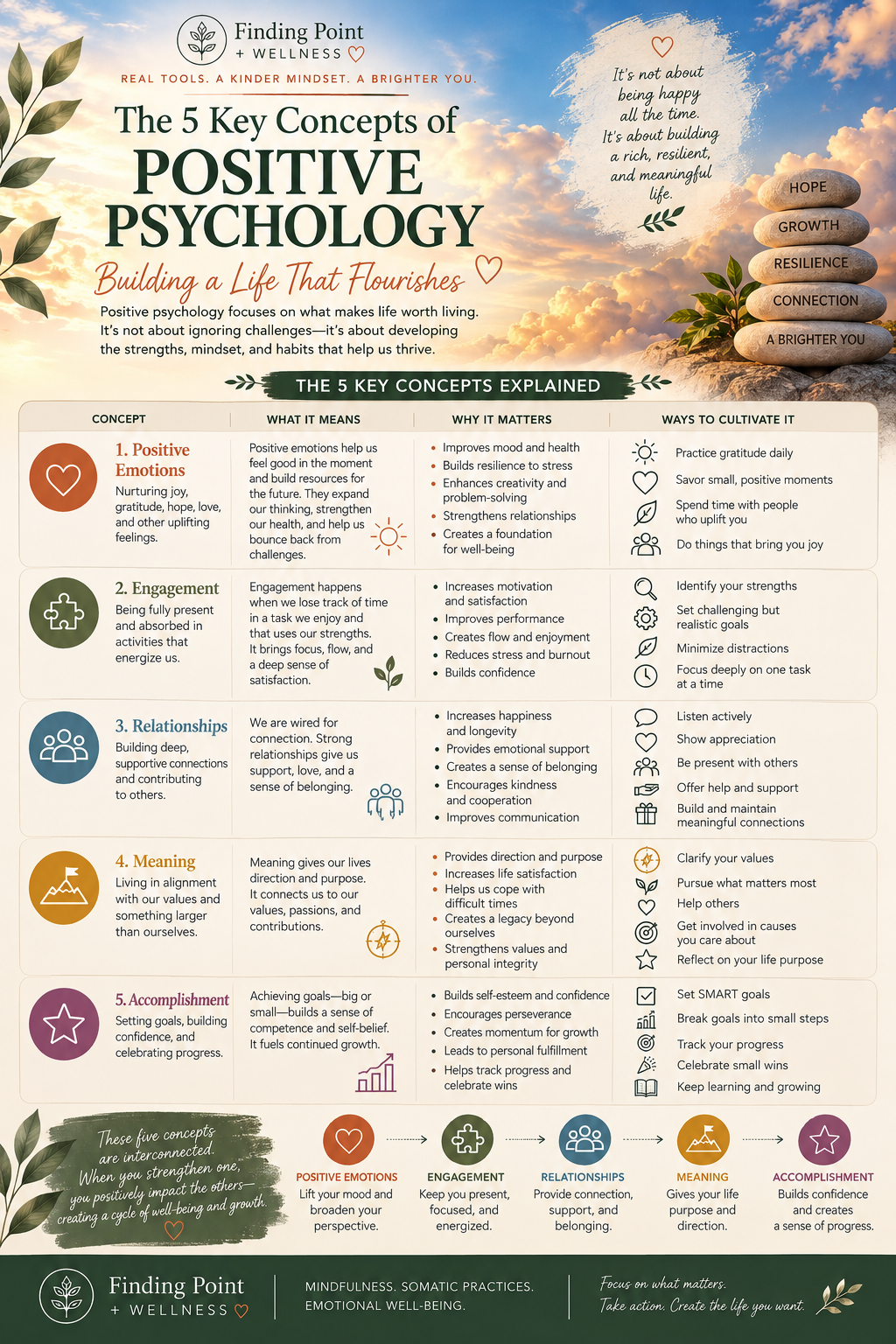
One of the parts of positive psychology that I find most tender is its attention to meaning. Meaning does not always arrive as a big life purpose. Sometimes meaning is much quieter. It may be found in repairing a relationship, learning to speak more kindly to ourselves, caring for our body after years of ignoring its signals, creating a peaceful home, tending to a garden, helping someone feel less alone, or choosing honesty when old fear asks us to hide.
Positive psychology reminds us that well-being is not only about feeling good. It is also about feeling connected to what matters. That connection can help us work through problems with more steadiness. If I know that I value peace, I may choose not to participate in every argument. If I know that I value growth, I may be more willing to apologize, learn, and try again. If I know that I value emotional honesty, I may begin telling the truth in smaller, safer ways until my voice feels less foreign to me.
Connection matters here too. We are shaped in relationships, and many of us heal in relationships as well. This does not mean every relationship is safe or every connection should be preserved. It means that supportive connection can remind our nervous system that we do not have to carry everything alone. Sometimes the most positive thing we can practice is allowing ourselves to be known by someone who meets us with care.
A Gentle Invitation to Begin Again
Positive psychology is not a promise that life will stop being difficult. It is not a guarantee that we will always feel grateful, calm, hopeful, or strong. What it offers is gentler than that. It gives us a way to notice the parts of life that still nourish us, the strengths that have quietly carried us, and the small choices that can help us respond with more compassion toward ourselves and others.
Maybe today we do not need to become a completely different person. Maybe we only need to notice one place where we are already growing. One breath where we softened. One moment where we chose curiosity over judgment. One small practice that helped us feel more whole. And maybe, as we keep listening to ourselves with patience, we begin to discover that well-being is not something we have to chase perfectly. It is something we can keep returning to, one honest and compassionate step at a time.
