Finding Our Center: A Gentle Approach to a Full Life
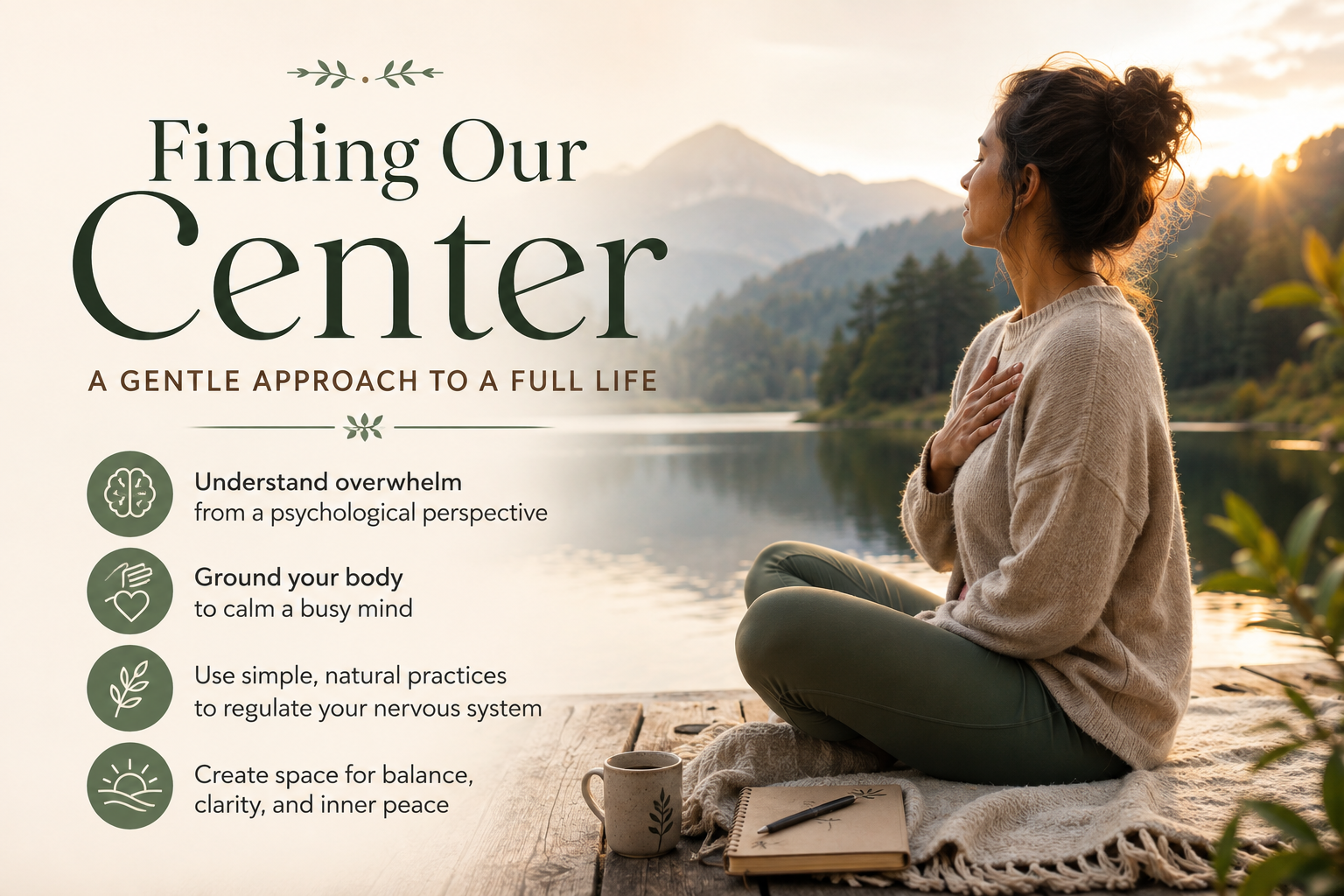
I've often noticed that in our modern world of overly full days, it is incredibly common for us to reach a point where our schedules simply outpace the hours we have available. We might notice our to-do lists blurring together and a quiet sense of mental dysregulation settling in.
This experience—what we sometimes call overwhelm—is not a personal failure or a flaw in how we manage our time. From a psychological standpoint, it is simply our nervous system communicating with us. It is a biological signal indicating that our minds have taken in a lot of sensory information and are asking for a gentle moment to recalibrate.
When our plates are full, the goal is never to force the mind into an immediate, unnatural silence, nor is it to simply push through. Instead, I find that the most healing path involves gently anchoring the body and creating small, intentional pockets of space. By integrating holistic, natural practices, we can shift together from a state of internal rushing to a state of grounded, peaceful presence.
The Psychology of Creating Space
Psychologically, when we take on a lot, our cognitive load reaches capacity. Our brains begin to process daily tasks as potential drains on our energy, which can keep our systems running on high alert. We might notice this happening in very ordinary moments. As example, have you ever just stood there, know you have several tasks to complete, only to find it difficult to choose where to start? Or perhaps you have experienced feelings of stress simply trying to get out the door in the morning, and base stressors throughout the day feels magnified. I've definitely been there.
To shift this narrative, we can draw from cognitive psychology and modern mindfulness practices. These fields offer the invaluable concept of the "observer mind." This is the practice of learning to watch our thoughts, tasks, and responsibilities drift by like leaves on a river, without feeling the absolute necessity to jump into the water and catch every single one. We learn to observe the fullness of our day while maintaining our internal integrity, choosing not to attach our sense of personal worth to how much we physically produce. You can explore more about the psychological benefits of mindfulness and observation through resources provided by the American Psychological Association.
Similarly, emotional health experts emphasize the profound importance of self-compassion and energy maintenance. Just as we strive to care for the natural world around us, we are deeply called to be gentle caregivers to our own bodies and minds. Offering ourselves grace in moments when we need to pause is an act of genuine strength. It is the quiet recognition that we are human, and that true health often lies in our willingness to simply take a breath.
Grounding the Body: How We Move Through It
Because our minds and bodies are so intimately connected, it is very difficult to simply "think" our way out of a busy mind. When cognitive busyness sets in, I have found that the most effective holistic intervention is to bypass the busy thoughts entirely and speak directly to the nervous system through the physical body.
We can learn a great deal about how this relationship works by exploring how our thoughts shape our physical reality right here on the blog. When we understand that connection, we can actively use our bodies to support our minds.
One highly effective way we can support our nervous systems naturally is through simple, intentional physical grounding. When I feel a sense of internal overwhelm sneaking up, I rely on gentle practices to help me work through it. This simple physical sequence sends an immediate, tangible signal of safety back to the brain. If you find yourself in a moment of mental overload, I invite you to try this somatic reset with me:
The Physical Anchor: Place one or both hands gently over the center of your chest. Apply a very mild, comforting pressure. This simple touch immediately redirects your focus, bringing your attention out of your thoughts and into the physical sensation of the present moment.
The Intentional Breath: With your hands resting on your chest, take a slow, deep breath in, feeling your chest rise against your hands. Exhale slowly, letting your shoulders drop away from your ears.
The Environmental Connection: Finally, gently press both feet flat against the floor. Notice the solid support beneath you. This physical connection to the ground mimics a sense of emotional stability, cueing your nervous system that it is safe to settle down.
By engaging in these natural, somatic techniques, we guide our bodies back to a state of calm without the need for anything synthetic or overly complicated.
The Healing Role of Our Environment
Another powerful way we can create mental ease is by looking at what surrounds us. We often underestimate how much our physical environment contributes to our mental state. Our nervous systems are constantly scanning our surroundings for cues of safety or ease. If we spend our days in artificial lighting, surrounded by clutter, or cut off from the natural world, our baseline tension naturally rises.
In fact, extensive research on neuroplasticity and healthy lifestyle factors demonstrates that engaging with natural environments and utilizing healthy lifestyle choices actively help rewire the brain for resilience and calm.
To support our health and cultivate genuine peace, we can bring the outside in. Nature is the ultimate holistic remedy. For me, being surrounded by the visual grounding of trees and natural bodies of water is essential; those environments make my spirit feel a deep calm. If you thrive in life-giving landscapes, I hope you make it a priority to seek them out.
Since for most of us, stepping into a forest today isn't possible, we can bring the essence of the natural world into our homes. Using pure, natural elements—like a drop of peppermint essential oil to clear a foggy mind, or the scent of cedar to mimic the grounding presence of the woods—can radically shift the energy of a room. Surrounding ourselves with visual and pure aromatic reminders of the natural world provides our senses with a restorative break, allowing our minds to naturally untangle themselves.
Processing the Past with Neutrality
Finally, working through a busy mind often invites us to look at how we carry our history. We all have a past, and our past experiences naturally shape our current perspectives. However, we do not have to view our history as a heavy weight that dictates our future.
It is entirely possible to process our experiences, extract the necessary wisdom from them, and choose to hold a neutral, peaceful stance toward what came before. When we practice this kind of wise discernment—viewing our past neutrally—we free up massive amounts of mental energy. That energy can then be redirected toward enjoying our present moments and building a healthier internal realm.
Moving Forward with Gentle Intention
Navigating a full life does not mean we are destined to live in a state of constant tension. By observing our thoughts with grace, utilizing natural somatic practices to ground our physical bodies, and curating an environment that supports our well-being, we take active ownership of our health.
If you are looking to deepen your understanding of these natural practices and want to explore personalized ways to support your nervous system, I invite you to explore our workshop offerings or schedule a 1:1 personal consult.
True wellness is never about perfectly managing an endless to-do list. It is about knowing how to gently call ourselves back to center when the world gets loud. If you are ready to begin creating more space and peace in your daily life, we invite you to explore the resources available on the Finding Point + Wellbeing home page. Step by step, and breath by breath, a grounded, peaceful life is within our reach.
