Navigating the Sympathetic and Parasympathetic Systems
Navigating the Sympathetic and Parasympathetic Systems
For a long time, I lived in a state of constant readiness. If I’m being honest, I still do; But the better I understand it, the more I’m able to find healing and regulation. In the past, I didn’t know the names, “sympathetic” and “parasympathetic”; I just knew that my mind was always several steps ahead, my muscles were perpetually tight, and I felt a drive to keep moving that I couldn't quite turn off. I assumed this was just the cost of being a responsible, productive person.
It wasn't until I began my own research into psychology and biology that I realized my mental patterns and my physical sensations were actually two sides of the same coin, governed by my Autonomic Nervous System. I was 'stuck' in a state of mobilization, and I had forgotten how to access a state of rest.
Understanding the bridge between the Sympathetic and Parasympathetic systems'—and how trauma can "jam" that connection—was a first step in reclaiming my health.
The Two Gears: Mobilization vs. Restoration
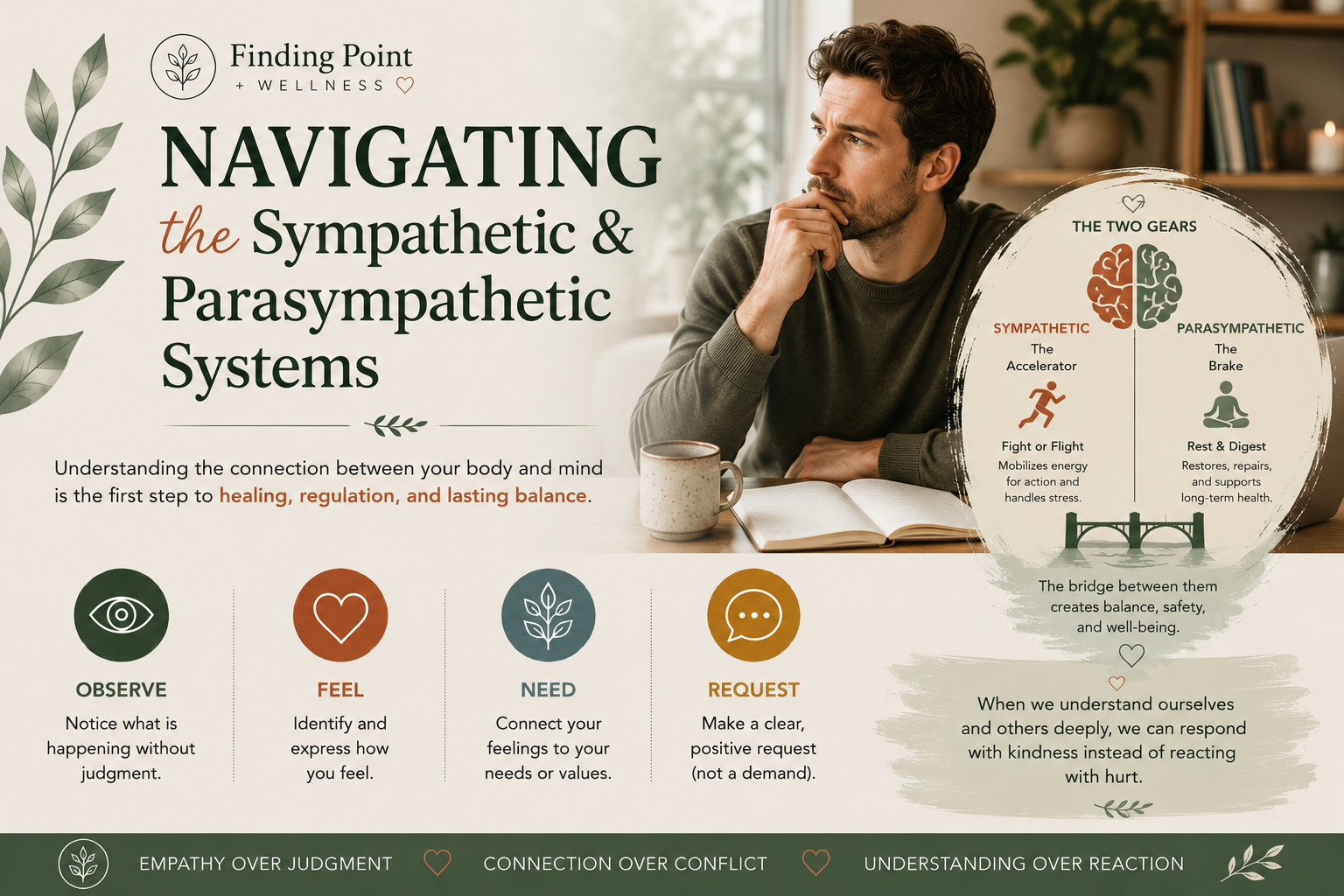
Our bodies operate using two primary "gears" within the Autonomic Nervous System. Both are vital for survival, but health is found in the balance between them.
1.The Sympathetic System (The Accelerator)
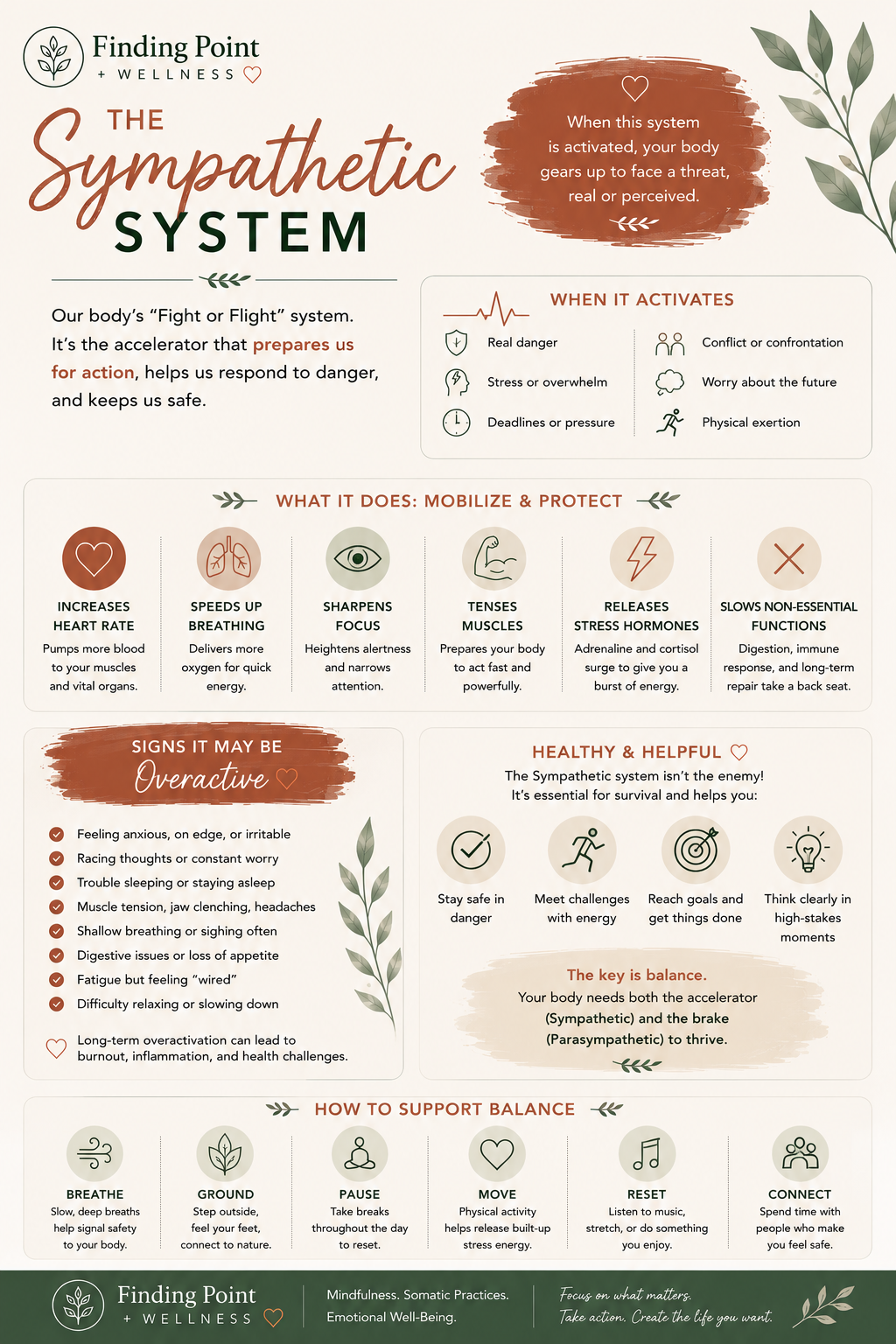
The Sympathetic system is our "Fight or Flight" response. When this gear is engaged, your heart rate increases, your breath becomes shallow, and your body prepares for immediate action. In a literal sense, this system is a life-saver. However, in our modern world, it is often triggered by non-physical threats—an overwhelming to-do list, a difficult conversation, or a worry about the future.
2.The Parasympathetic System (The Brake)
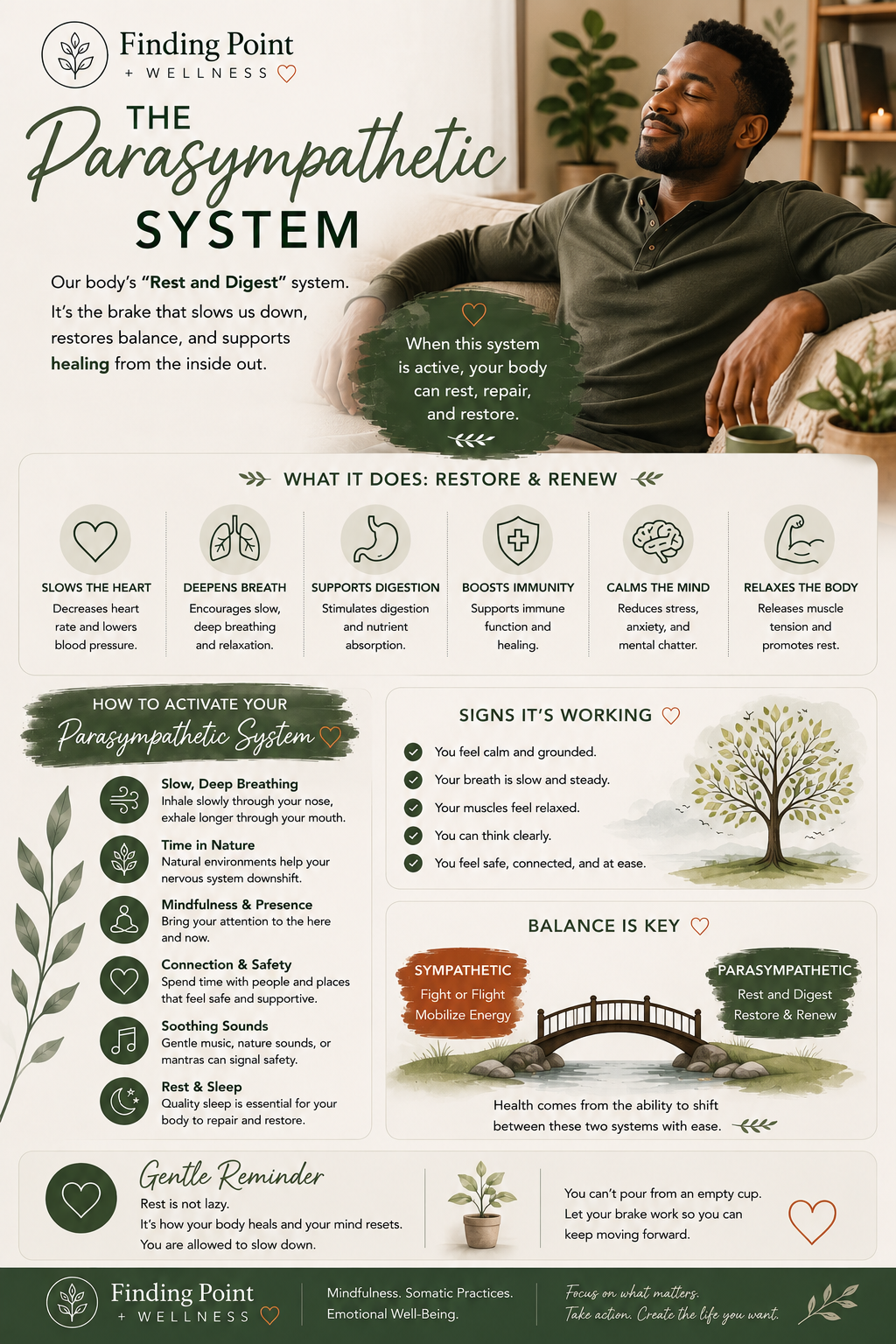
The Parasympathetic system is the "Rest and Digest" gear. This is the state where the body repairs itself. When you are in this gear, your heart rate slows, your digestion becomes active, and your body focuses on long-term maintenance. This is the only state in which we can feel truly "settled."
When the Gear Gets Stuck: The Impact of Complex Trauma
For those of us who have navigated prolonged periods of struggle or lived with Complex Post-Traumatic Stress Disorder (C-PTSD), this "shifting" mechanism often becomes damaged. When a person is exposed to long-term stress, their brain begins to view "High-Alert" as the only way to stay safe.
Over time, the Sympathetic system doesn't just turn on for a moment of danger; it becomes the default setting. I even learned to “hack” my system by breathing in a regulated manner, but my autonomic system bypassed my tricks and my health continued to suffer.
A person’s Sympathetic system staying turned on is why many people feel "wired but tired", your mind wants to rest, but your body is still scanning the room for a threat that isn't there anymore.
If your "accelerator" feels stuck, it is important to realize this isn't a character flaw. It is a physical adaptation your body made to protect you. Re-engaging the ability to rest takes special care because, to a traumatized system, stillness can actually feel "vulnerable" or dangerous. You aren't just learning to relax; you're rebuilding a biological bridge.
The Cost of Chronic High-Alert
The human body was never meant to stay in a Sympathetic state for weeks or months. Because this state suppresses long-term maintenance functions to save energy for "survival," staying there creates a massive "health debt."
Staying in this gear keeps the body in a state of high inflammation, which can lead to various physical challenges:
Digestive Issues: The body shuts down digestion to save energy, leading to gut imbalances or a lack of nutrient absorption.
Cardiovascular Strain: Constant high heart rates and blood pressure put "wear and tear" on the heart and arteries.
Immune Suppression: The body deprioritizes the immune system when it thinks it’s in immediate danger, making recovery from illness much slower.
Dysautonomia: The system can become so "jostled" that it loses the ability to regulate heart rate or blood pressure consistently in daily life.
It took all of the above threatening not just my ability to function, but my actual life, before I really started to make the changes I knew were necessary for my wellbeing. I’ll admit I can be stubborn, and that stubbornness can be both a blessing and a curse.
Re-Learning the Path to Safety
The first step to staying "healthy inside" is noticing when you have shifted into that "High-Alert" gear. I look for physical tension in my jaw, a sense of "future-pressing" (trying to solve problems that haven't happened yet), or feeling easily overwhelmed by other people's energy. This can also be seen when your mind becomes stuck on ruminations, or past events being played on repeat in your mind.
If I start spending a great deal of time in bed or feel too nauseous to eat, this is a physiological sign that my Autonomic Nervous System has shifted into the "Dorsal Vagal" state, commonly known as the Freeze or Shutdown response. I definitely have more than my share of experience there too and will continue writing about it in other posts.
Once you recognize the shift, you can use these simple somatic protocols to help gently signal to your brain that it is safe to shift gears.
Exercise 1: The Extended Exhale
Your breath is the most direct bridge to your nervous system. A short, sharp inhale signals "action," but a long, slow exhale signals "safety."
The Technique: Breathe in naturally through your nose.
The Shift: Purse your lips as if you are blowing through a straw and exhale as slowly as possible. Aim for the exhale to be twice as long as the inhale.
The Logic: This physical act forces your heart rate to slow down. It sends a literal signal to the brain that there is no immediate physical threat.
Exercise 2: The Horizon Scan
When we are in a Sympathetic state, our vision "narrows" as we look for threats (even when they’re not real). To break this, we use our peripheral vision.
The Technique: Soften your gaze and look straight ahead.
The Shift: Without moving your head, try to notice the far edges of the room - the corners of the ceiling and the floor in your peripheral vision.
The Logic: Widening your field of vision is a biological "all-clear" signal. It manually switches your brain back to a state of rest.
The Integrity of the Journey
I have had to learn that my healing isn't a race. I cannot rush it, but I can be proactive in my own recovery. Every time I notice I am "pressing" and choose to take one long exhale, I am laying a single brick in a new foundation. I am proving to myself that I am capable of leading my body back to safety.
When I am in a Parasympathetic state, I am more logical, more compassionate, and much healthier. I have learned that I don't have to carry the weight of my whole future. I am allowed to be still, and I am allowed to give my body the special care it needs to learn how to settle again. Being "healthy inside" is a choice we make one moment at a time. A phrase I often use is, “One step, one moment, at a time”. That is the best we can do.
